Catalogue
Copper Peptides
Copper-binding tripeptide compounds studied in cell culture for gene expression and biochemical signalling assays. Supplied lyophilised with batch-specific certificates of analysis.
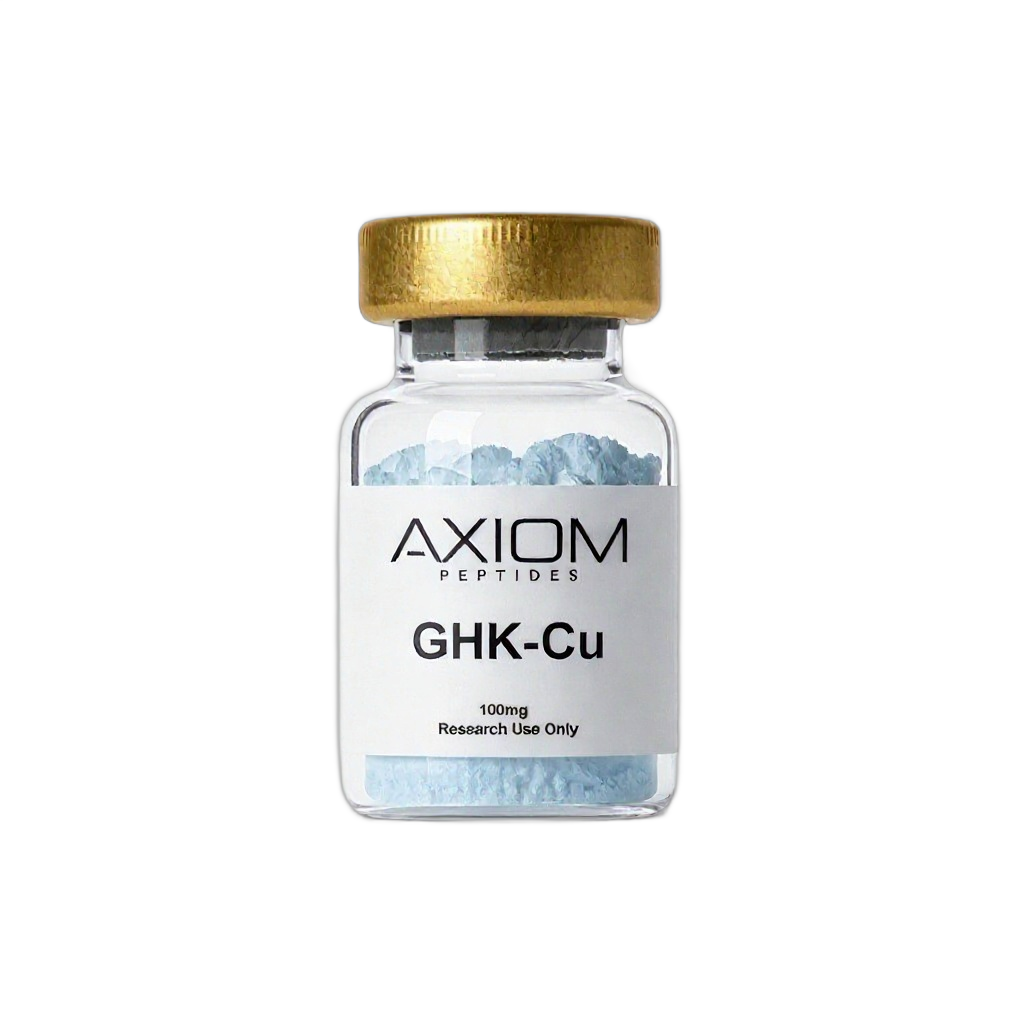
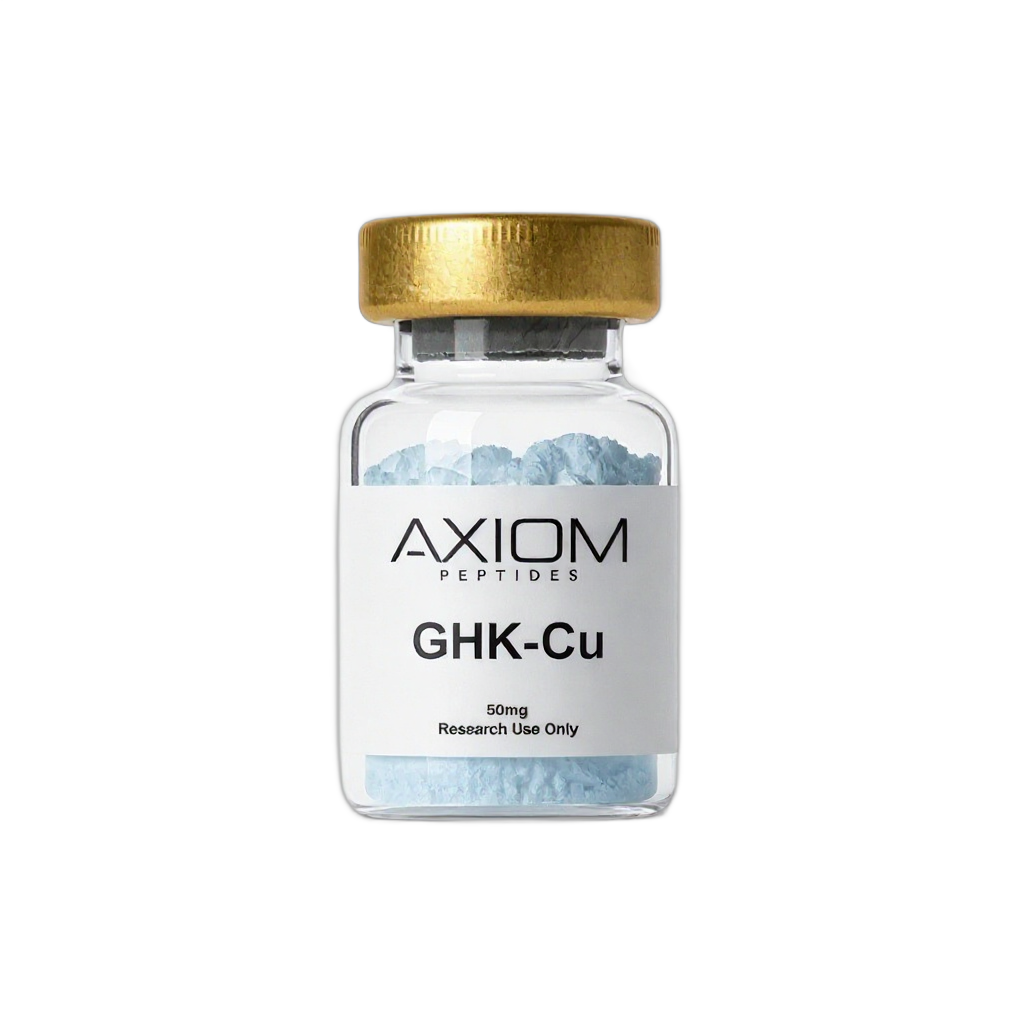
About this category
Copper peptides are short sequences that form a coordination complex with a copper(II) ion. The best characterised is GHK-Cu, a tripeptide of glycine, histidine and lysine bound to copper. The histidine imidazole and the terminal amine give the sequence a high affinity for copper, and it is this metal-peptide complex, rather than the peptide sequence alone, that defines the class and its behaviour in solution.
Because the active species is a coordination complex, laboratory work in this category tends to be as much inorganic as peptide chemistry. Copper occupancy, complex stoichiometry, pH-dependent stability and the colour change that accompanies complex formation are all standard analytical checkpoints. The complex is noticeably more sensitive to buffer composition than the uncomplexed peptides elsewhere in our catalogue.
Reported in vitro applications include fibroblast culture and matrix biology work, gene expression profiling, studies of copper transport and bioavailability, and analytical characterisation by spectroscopy. The literature on this compound family spans dermatological, matrix and trace-metal research contexts, and is preclinical in nature.
Handling notes matter more here than elsewhere: the complex is light and pH-sensitive, and reconstitution conditions affect stability. Batch certificates of analysis are published in our COA library, and referenced background is available in the research hub.
These materials are supplied strictly for in-vitro laboratory research. They are not medicines, are not licensed for human or veterinary use, and no guidance on use in humans or animals is offered or implied.
All products are supplied for in vitro research use only. Not for human or veterinary use. See our Research Disclaimer.